Why the Crater Lake Keeps Changing Colour (a Guide's Field Notes)
Why Santa Ana's crater lake is turquoise and why the shade keeps shifting, sulfur, minerals, light and season, from a guide who watches it every week.
 By Carlos Hernández, Santa Ana Volcano tour guide & hiking specialist
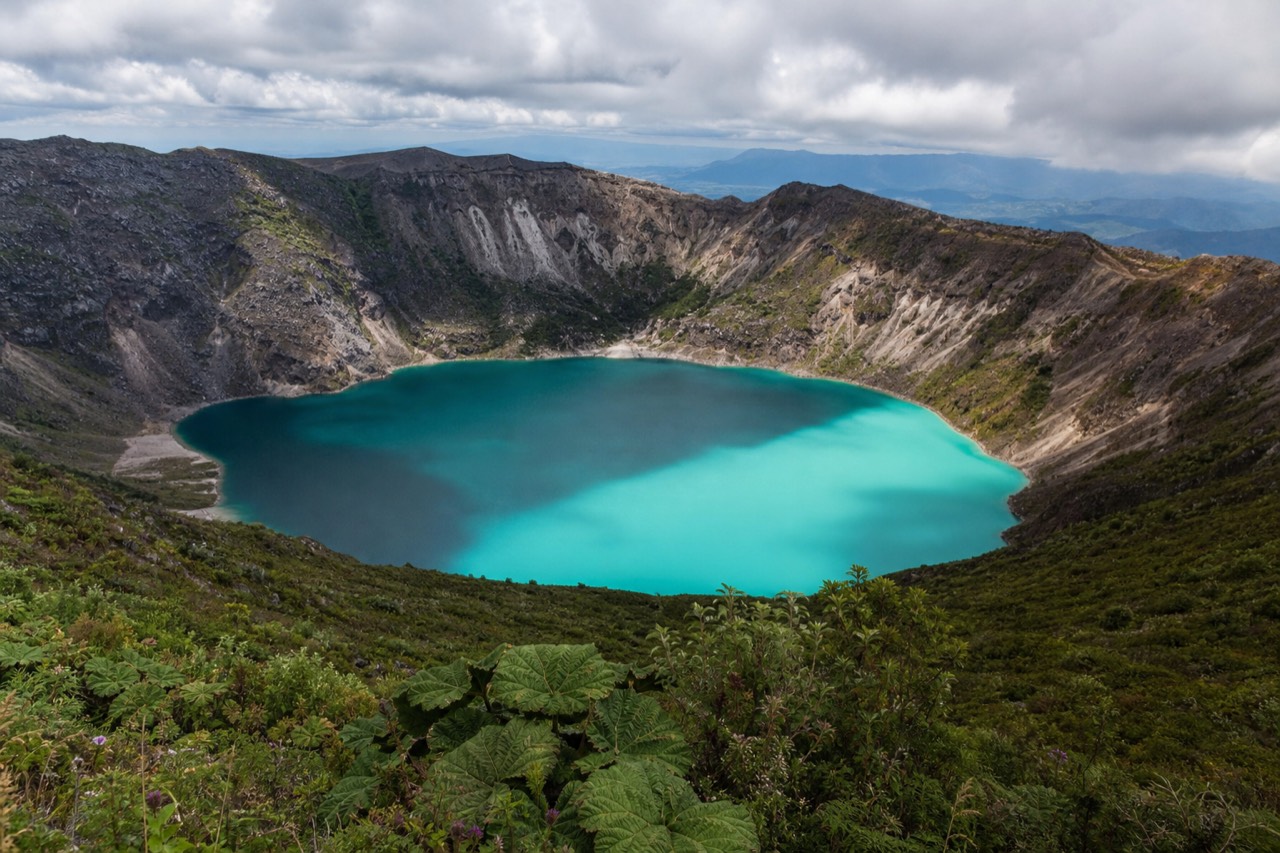
I keep an informal ledger in my head of every shade I have seen in that crater. Milk jade on a windy January morning. Dense chalky green under June cloud. Once, after a bright dry-season noon, a turquoise so loud that a woman in my group asked, entirely seriously, whether the park dyed it. Eight years of guiding this trail since 2018, and the lake has never shown me the same face twice.
People assume the changing colour is a trick of memory or camera filters. It is neither. The lake really does shift, and once you know what is in that water and what light does to it, every shade starts to make sense.
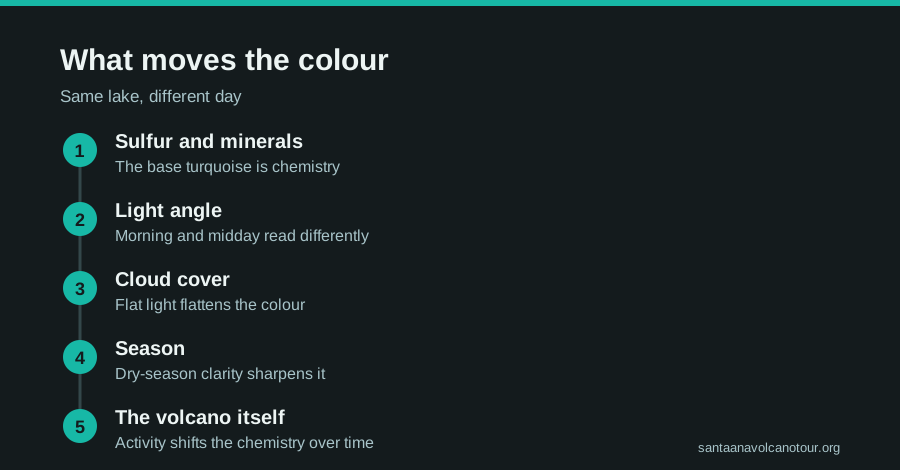
What makes the lake turquoise in the first place?
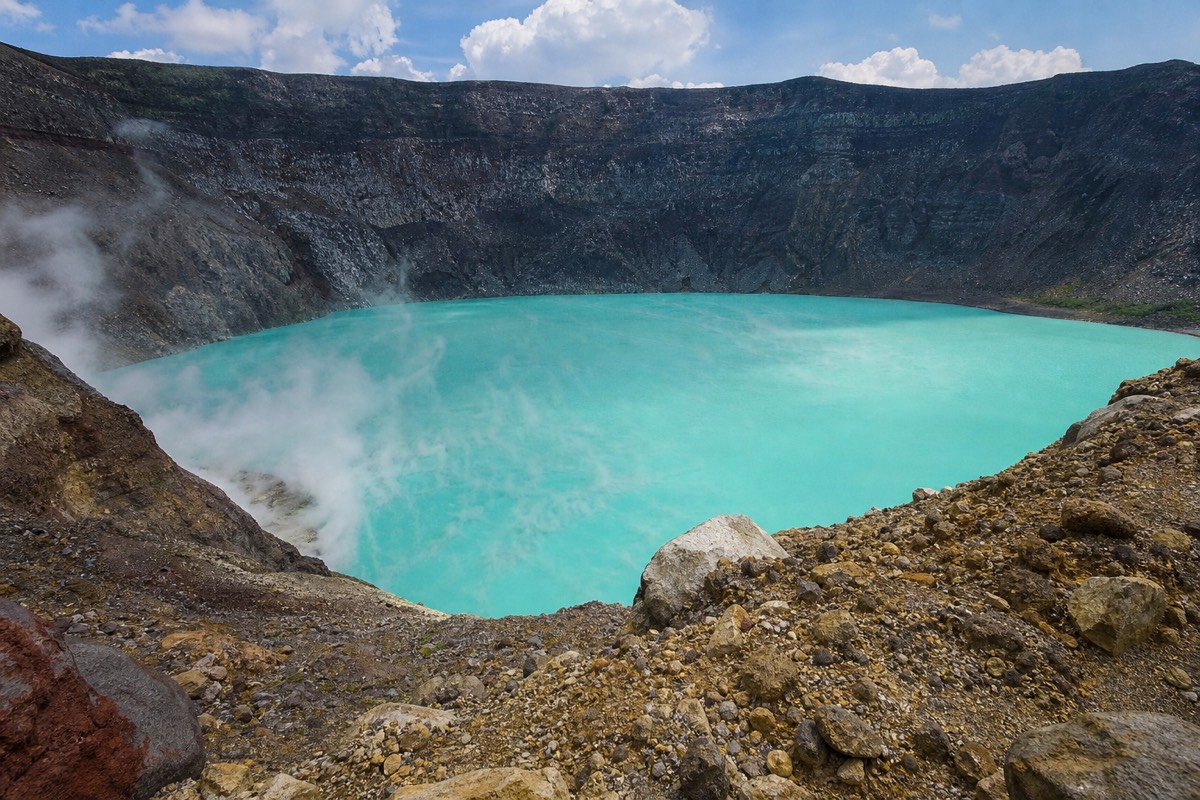
Chemistry, not clarity. The crater holds a sulfuric, acidic, mineral-loaded lake, and those suspended minerals make the water opaque. Instead of absorbing light the way a clear lake does, the surface scatters it back, and what bounces off that particular mineral soup reads to the human eye as turquoise.
Think of the difference between glass and paint. A clear mountain lake behaves like glass: light enters, blues survive, depth darkens everything. Santa Ana's lake behaves like paint. Nothing meaningful enters; the colour lives entirely at the surface, produced by sunlight ricocheting off dissolved and suspended volcanic minerals in strongly acidic water. This is also why the lake looks strangely flat and dense in photographs, more like enamel than water.
It follows that this is not water you interact with. Swimming is impossible and prohibited, rim access is managed, and the fumarole steam drifting across the surface is your standing reminder that this is an active volcano's chemistry lab. Santa Ana last erupted in October 2005 and is watched daily by MARN's monitoring network, with no current advisories or closures. The full story of the crater itself, geology, access, viewing spots, lives in our crater lake guide.
| Driver | What it does to the colour |
|---|---|
| Sulfur compounds | The acidic base chemistry behind the green-blue palette |
| Suspended minerals | Make the water opaque, so colour is scattered, not absorbed |
| Sun angle | Low sun mutes it; high sun switches the turquoise fully on |
| Cloud cover | Flattens everything toward grey-green |
| Wind | Texture on the surface breaks the enamel sheen |
| Season | Dry-season skies give the clearest, loudest colour |
Does the colour really change through the year?
Yes, though what changes most is the light, not the lake. Under November-to-April dry-season skies the crater sits in clean sun for hours and the turquoise runs at full volume. In the May-to-October green season, afternoon cloud arrives almost daily and drags the palette toward soft, milky greens.
Let me be careful here, because I only claim what I have seen and what is verified. I cannot tell you the lake's mineral load month by month; nobody hands guides a chemistry report at the trailhead. What I can tell you, from standing on that rim week after week across eight years, is the pattern. Dry season: hard blue sky, hard turquoise lake, edges of the crater sharp as cut paper. Green season: lusher slopes all around, and a lake that spends more of the day in shadow moods, grey-green, then briefly brilliant whenever the cloud tears open. The late-morning climb window mostly beats the afternoon cloud build-up, which is exactly why the daily schedule works the way it does. For the wider weather calculus, see the best time to hike.
| Season / time | Sky you usually get | Lake you usually see |
|---|---|---|
| Dry season (Nov-Apr), late morning | Clear, strong sun | Peak turquoise, sharpest views |
| Dry season, early light | Low sun, long shadows | Muted jade warming by the hour |
| Green season (May-Oct), late morning | Sun racing cloud | Bright windows between grey spells |
| Green season, afternoon | Cloud built up | Milky green, often part-hidden (crater closes ~13:00 anyway) |
When should you climb if the colour is the whole point?
A clear dry-season day, arriving with the daily ascent so you stand on the rim in late morning, the sun high and the lake at full saturation. The group starts around 9:30 to 10:00, last start 11:00, and that timing is close to ideal: high light, before any afternoon build-up.
The scheduling gods were kind here. The window you are required to use happens to be the window a photographer would choose. I have watched hundreds of travellers crest the rim somewhere around midday and get the lake at its most electric, then eat a paleta at 2,381 m while the fumaroles smoke below. If you want the whole morning solved rather than assembled, this is what the guided day does: San Salvador hotel pickup with El Tunco and El Zonte covered, admission included, a certified bilingual guide, and lunch afterwards down at Coatepeque. Book the guided day tour and check live availability and prices on Viator; it holds 4.9 stars across 869 reviews with a Badge of Excellence, and cancellation is free up to 24 hours. I do not lead that departure myself, but its groups reach the rim in exactly the light I have been describing.
How is this lake so different from Coatepeque, just across the valley?
They are opposites wearing the same landscape. The crater lake is small, sulfuric, acidic, opaque and untouchable, turquoise by mineral scatter. Coatepeque is a vast caldera lake about 10 km across, deep blue, clear and alive: people swim in it, eat lunch beside it, even rent jet skis on it.
Standing on Santa Ana's rim you can see both at once, and the comparison is the best free geology lesson in the country. Same volcanic family, opposite fates. The crater lake sits inside an active vent, its water an ongoing chemical event. Coatepeque fills an ancient collapsed caldera, its chemistry long settled, which is why its blue behaves like normal deep water: rich, transparent at the edges, darker with depth, changing gently with the sky rather than flickering like enamel. One you photograph from a managed rim; the other you jump into an hour after your descent, which is precisely how the classic day here is sequenced. Coatepeque has its own full guide covering the swimming, the lakeside lunches and the jet-ski rentals recent visitors keep mentioning.
| Santa Ana crater lake | Lake Coatepeque | |
|---|---|---|
| Origin | Active summit crater | Ancient collapsed caldera |
| Size | Small pool inside the crater | ~10 km across |
| Water | Sulfuric, acidic, opaque | Clear, deep freshwater blue |
| Colour behaviour | Surface scatter, shifts fast with light | Deep-water blue, changes gently |
| Swimming | Impossible and prohibited | Yes, popular |
| How you meet it | From the managed rim, ~2 h climb | Lakeside lunch, jet skis, an easy afternoon |
How does the light on the lake change through the permitted window, hour by hour?
The permitted climb window is short and it moves through the best light of the day. A 9:30 start puts you on the rim near midday with the sun high and the lake at full turquoise; an 11:00 start, the last permitted, reaches the rim as the crater area is closing around 13:00. Earlier starts buy more colour and more time.
People assume the schedule is a restriction on photography. On this mountain it is closer to a gift, because the roughly two-hour climb delivers you to the rim at the hour the sun is doing the most work. Here is how the morning tends to play out, with the clock times taken from the daily window and the durations as allowances.
| Time | Where you are | Light on the lake |
|---|---|---|
| ~7:00 | Trailhead access opens; early arrivals watch cloud peel off the summit | Lake still hidden above you |
| ~9:30 to 10:00 | The daily group starts | Sun climbing; the crater is in full daylight by the time you reach it |
| ~11:00 | Last permitted start | Anyone starting now reaches the rim close to closing time |
| ~11:30 to 12:00 | Early starters crest the rim | High sun, strongest turquoise, steam bright against the water |
| ~13:00 | Crater area closes | The colour is often still at its loudest as the guides call the descent |
| Afternoon | Back on the trail, then down | Green-season cloud usually building over the summit behind you |
The practical reading is simple: be in the group that leaves at 9:30, not the one that scrapes in at 11:00. The early group gets high sun on the rim and an unhurried stay before the closure; the late group gets the same sun for a fraction of the time. In the dry season, November to April, that difference is comfort. In the green season, May to October, when afternoon cloud is building somewhere behind the summit, it can be the difference between seeing the lake and seeing the inside of a cloud. The dawn version, which starts in darkness on special announced dates and watches the lake turn from grey to turquoise, is a separate story I tell in sunrise on Ilamatepec, and the everyday mechanics of joining the 9:30 group are in the morning group ascent.
Why can't you get closer to the water for a better look?
Because the water is acidic and sulfuric, the fumaroles are venting, and the crater is the summit of an active volcano. Access to the rim is managed by the guides, swimming is impossible and prohibited, and the viewing positions they use give you the colour without putting you on unstable ground above it. There is no better view down there, only worse footing.
Every week someone asks whether we can go a little further, and every week the answer is the same, delivered as kindly as I can manage after eight years. This is crater-rim safety, and it is the one part of the climb where I do not negotiate. The rim is bare volcanic rock, cooler and windier than anywhere below, and the ground on the crater side of it is not something you want to test. The lake itself is a chemical event rather than a swimming hole; the acidity is why it holds that opaque turquoise, and it is also why nobody goes near it.
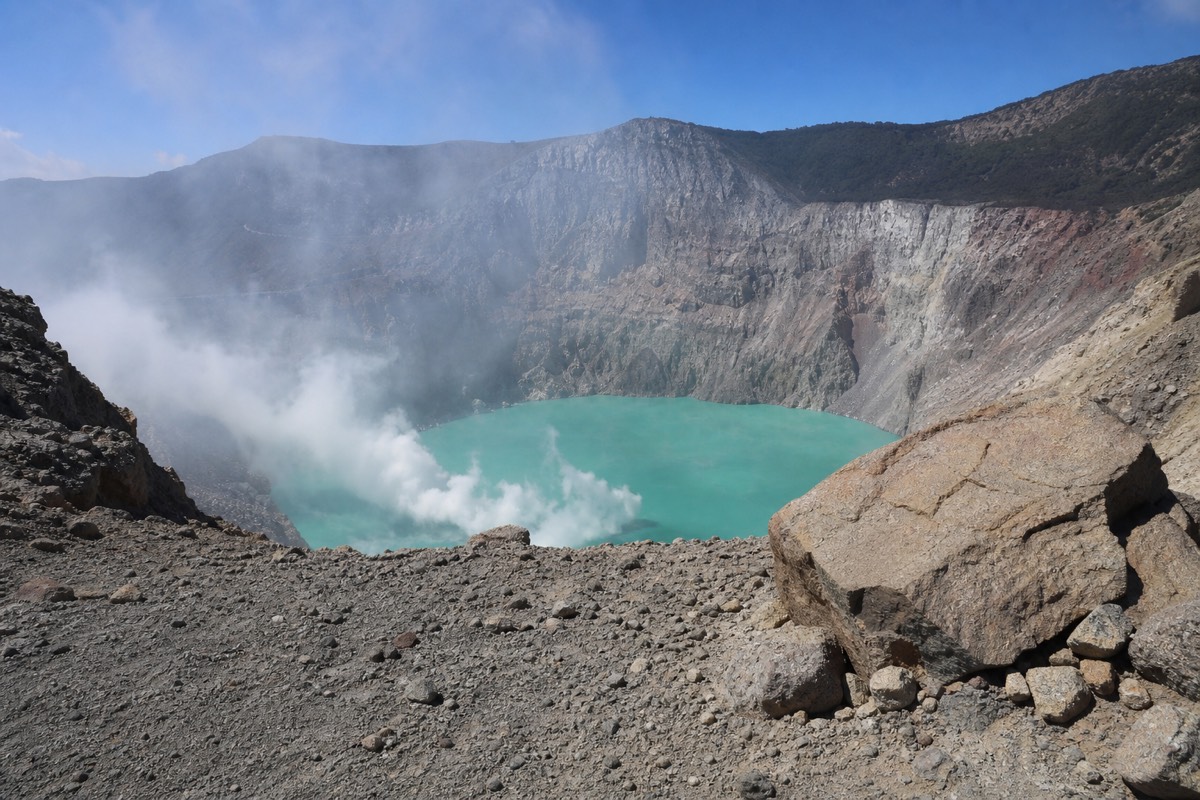
The management is light-touch and sensible. The mandatory local guides know where the group can stand, they keep people back from the edge, and they watch the wind, which on the rim can arrive in gusts strong enough to move a hat and a distracted photographer with it. The steam you see drifting off the surface is the volcano's own reminder that this is a monitored, active system; Santa Ana last erupted in October 2005 and MARN's network watches it continuously, with no advisories or closures in force. Those two facts, active and currently quiet, are exactly why the rim is open at all and exactly why the guides treat it with respect.
Here is the thing photographers eventually accept: the managed positions are the good positions. The colour is a surface effect produced by light scattering off suspended minerals, so it does not improve by getting closer; it improves by getting the sun higher and the sky clearer. Stand where the guides put you, wait for the steam to drift, and shoot the whole crater with the far wall in frame for scale. Why the guide rule exists at all, and what happens to people who try to dodge it, is in can you hike it without a guide, and the volcano's current status is covered in is Santa Ana volcano active.
What do the different shades mean, and should any of them worry you?
No shade should worry you. Every colour I list below is light and weather working on an opaque mineral surface: grey under cloud, jade in low sun, hard turquoise under high dry-season sky, textured when the wind picks up. Reading the volcano's actual state is MARN's job, not a hiker's, and MARN currently reports no advisories or closures.
I keep this glossary because travellers reach the rim, see a colour that does not match the photo they saved, and ask if something is wrong. Almost always the answer is "the sky", and I would rather give you the vocabulary in advance.
| Shade you see | Usual cause | What to do |
|---|---|---|
| Flat grey or grey-green | Cloud over the crater, low or diffuse light | Wait; the colour switches on when the cloud tears |
| Milky jade | Low sun early in the window, or thin high cloud | It warms toward turquoise as the sun climbs |
| Chalky pale green | Green-season overcast, damp air | Enjoy the moody version; it is the same lake |
| Saturated turquoise | High sun, clear dry-season sky, late morning | This is the postcard; shoot now |
| Textured, broken sheen | Wind ruffling the opaque surface | Frame with the steam; the texture photographs well |
| Steam-veiled | Fumaroles active, wind pushing vapour across the surface | Normal for an active crater; wait for a gap |
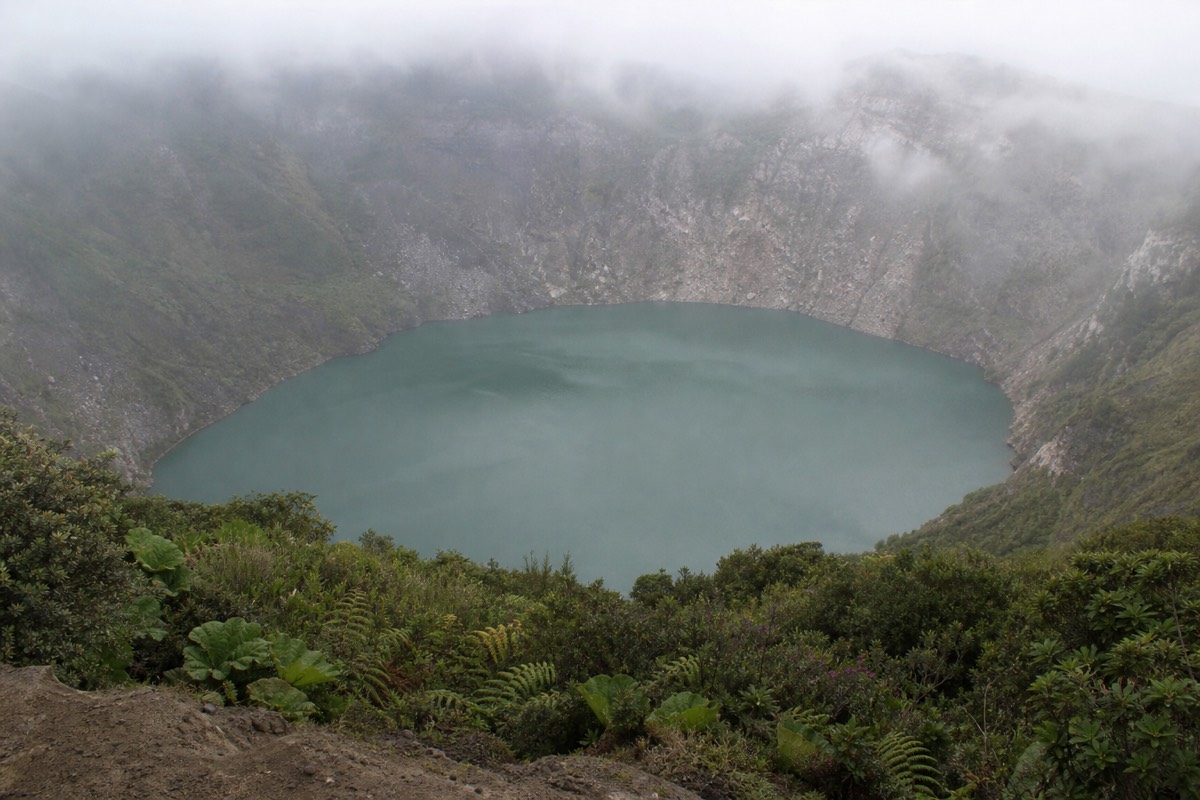
The one thing this table does not do is diagnose the volcano, and I want to be direct about that. I am a trail guide, not a volcanologist. I can tell you that Santa Ana is an active stratovolcano, that its last eruption was in October 2005, and that MARN's monitoring is continuous and currently reports nothing to act on. I cannot read the mountain's mood from the colour of its lake, and I would distrust anyone at the trailhead who claims to. If the ministry ever issues an advisory, the guides will know before you do, and the trail simply will not open.
So treat the shades as weather. Grey means cloud, jade means early, turquoise means you got the good day, and none of them means anything about the ground under your feet. If you are curious about the history behind the chemistry, the Santa Ana facts guide covers it. Then go, stand on the rim, and take whichever lake you are given.
Will the lake ever look the way it does in the photos you saw?
Probably, and possibly better, if you stack the odds: dry season, a clear morning, the standard late-morning arrival. But go ready to meet whichever lake shows up. The grey-green moody version under racing cloud is not a failure; it is the same volcano telling a quieter story.
That is the closing note I give every group at the rim. The famous shade is real; nobody is filtering that turquoise into existence, and the country's official tourism material for Santa Ana and Ilamatepec does not exaggerate it. But the lake is a live system wearing that day's sky, and the travellers who enjoy it most are the ones who came for the mountain and treat the colour as the encore. Some of my favourite mornings up there were the strange ones: steam pinned flat by wind, water like old jade, ten people on the rim in total silence. Come see what it decides to be the day you climb. Then go swim in the blue one.